

Motor Skill Milestones
28 January 2013
No comments

From only a few months old, babies will begin to develop motor skills. At first they’ll grab and giggle, but soon, they’ll begin to move their entire bodies.
Remember that each baby develops at his or her own pace so don’t panic if your child varies. However, if this is an ongoing trend you should ask your pediatrician about it just in case there are developmental delays.
Here are some key motor skill milestones to prepare for:
Rolling over
Around the same time that your baby is learning to sit on his or her own, they’ll learn to roll over. You’ll start to see your baby lift head and shoulders high, using arms in what looks like imitation pushups. Eventually, at as early as four months, your little one may be able to roll over from belly to back. But don’t worry if it takes another month or two to reverse the motion.
Crawling
Crawling typically starts to take place between six and 10 months. Likely signs that crawling is coming is if your baby starts repositioning his or herself from sitting up to hands and knees. You also may see some scooting, a sign of attempted movement. At first, babies may use the right leg and arm at the same time, but they’ll quickly learn that using the left arm with the right leg is much steadier and more efficient. Crawling gives babies an opportunity to explore the world around them.
Standing
After babies master crawling, they will begin to stand, not on their own at first, but while holding onto you or other objects for support. Babies are normally proficient standers by around nine months. Standing is an exciting sign because it’s the first step to walking.
Walking
Arguably one of the most exciting motor skill milestones, walking typically begins by holding onto objects and inching along. Most babies begin to walk on their own at around one year, but don’t begin to use more finely tuned motor skills, like walking backwards, until around 15 months.
Sources:
-“Developmental milestones: Rolling over.” Baby Center.
-“Baby physical and motor skills.” Baby Zone.
-“Baby Milestones.” Parenting.com.
-“Developmental milestones: Crawling.” Baby Center.
-“Milestone chart: 7-12 months.” Baby Center.
-Photo courtesy of photostock/freedigitalphotos.net

5 Finger Foods for Picky Eaters
24 January 2013
No comments

Little ones can make meal times tough. Many children hit a phase where they refuse to eat what we put in front of them unless it’s a certain color, is one of two food items or contains 75% sugar. Sometimes there’s no rhyme or reason for these dietary decisions, but as parents, we know that they simply can’t continue. Growing kiddos need the right nutrients in order to stay healthy and strong. Check out these ideas for healthy finger foods that your picky eater will love:
Sweet potato chips
Cut a sweet potato or two into thin slices and place on a baking sheet. Drizzle the slices with olive oil and a tiny bit of salt. Bake for 20-25 minutes, or until golden brown and crispy.
Health benefits: Sweet potatoes are high in vitamins A, C and D, meaning they play a role in healthy teeth, bones, skin and a healthy immune system.
Frozen blueberries
Frozen blueberries are a fruity, tasty treat. Simply stick a bunch of them in the freezer or pick up some already frozen ones from the grocery store. Give them to your little one as a snack or first thing in the morning. To them, it’s like having ice cream for breakfast!
Heath benefits: Blueberries boost memory, key for those just starting out in their academic careers. They’re also high in fiber.
String cheese
String cheese is a fast, easy option that’s especially great for those who don’t get enough milk. Bonus: string cheese is easy to pack and an excellent grab-and-go food. Pick up skim versions if you’re worried about high fat content.
Health benefits: Cheese is a source of dairy for healthy bones, nails and teeth.
Hardboiled eggs
Hardboiled eggs are quick to make. Plus, they’re really inexpensive. Their unique texture may be enough to intrigue picky eaters, enticing them to eat this fun finger food.
Health benefits: Eggs are high in protein, B12 and iron, which is especially beneficial because the American Academy of Pediatrics says that 15% of children under three years old don’t get enough iron.
Grain-dusted strawberries
Chop up a few cups of strawberries and dust them with ground Cheereos. You can also do this with peaches, bananas, avocadoes or even tofu.
Health benefits: This tasty snack combines the health benefits of fruit and whole grain, incorporating nutrients like fiber, Vitamin C and potassium.
Sources:
-“9 Health Benefits of Sweet Potatoes.” Care 2 make a difference.
-Galland, Leo. “Surprising Benefits of Blueberries.” Huffington Post.
-Jacobsen, Maryann. “10 of the Best Finger Foods for Toddlers.” Raise Healthy Eaters.
-Giorgio, Katie. “Finger Foods for Toddlers.” Baby Zone
-Photo courtesy of David Castillo Dominici/freedigitalphotos.net

Mommy Math: Most Popular Baby Names
23 January 2013
No comments
For over five years, Aiden has reigned as the most used boy name and Sophia has made the top five. At MomTrusted, we mapped out the five most popular names for boys and girls, using a star system. Each year, the most popular received five stars and the fifth most popular received one star.

Extreme Parenting: The Family on Bikes
22 January 2013
No comments

The biking family: John, Daryl, Davy and Nancy Vogel
The Vogel family spent multiple years of their lives on bikes. During their largest journey, they traveled 17,300 miles along the Pan American Highway. Their journey took them from Alaska to Argentina, through 15 countries. The Vogel’s twin sons were 10 years old at the time. Mother, Nancy Sathre-Vogel talked to us about traveling by two wheels, with two kids.
MomTrusted: What made you decided to start your biking journey?
Nancy: Although we are more known for cycling from Alaska to Argentina, that journey actually started a couple years earlier when we made the decision to take a one-year career break and cycle around the USA and Mexico. Our twin sons were 8 at the time, and my husband and I decided we wanted more time with them. We had also lived overseas for most of our sons’ lives and wanted to show them their own country – and there’s no better way to do that than on a bicycle.
As we cycled the Pacific coast on that one-year trip, we met some other cyclists who were on their way to Argentina. “Let’s go!” we thought. But reality kicked in and we realized we were not adequately prepared for such a journey. We continued with our loop around the USA and set our sights on a separate journey at another time.
Our “one-year career break” kinda, sorta got extended…
MomTrusted: I know you’ve done a lot of family bike trips. When was the first and where did it take place?
Nancy: We haven’t taken all that many family bike trips, but each one was, shall we say, rather long? Although my husband and I bike toured extensively before our children were born, their first bike tour came when they were 7. That summer we took a 4-day trip into the mountains around Idaho, and then a few weeks later a 2-day trip to the Snake River canyon. That was it until we set off for our one-year trip around the USA, which led to our 3-year trip from Alaska to Argentina.
MomTrusted: I know you and your husband are both teachers. How did you budget for your trips?
Nancy: For our first big trip, we financed it completely with savings.
Once we decided to cycle the length of the Americas, we had to get creative. We rented out our home (it was paid for, so rent was income), wrote articles for magazines, sold ads on our website, and anything else we could do to bring in a few bucks. Anything not paid for with those, came out of savings.
MomTrusted: What was the biggest challenge of bringing kids along on your journeys?
Nancy: I think the hardest part was dealing with the critics. Although my husband and I felt that our travels were the best childhood we could provide for our children, there were those who felt we were using and abusing our children. Because of their criticism, I spent countless hours evaluating and reevaluating my motives to see exactly why I was doing what I was doing. I came to the conclusion that biking around the world might not be perfect for all kids, for our children it was the best thing going.
Our society raises us in such a way that we should grow up to want certain things. The expectations of society are that we will want the big house in the suburbs, three cars in the driveway, soccer and gymnastics for the kids, and all that. When we made the decision that the expected life wasn’t the life we wanted, there were people who felt very strongly that we weren’t being fair to our children. That’s a hard thing to deal with.
MomTrusted: What’s the best part of having your kids join you on your travels?
Nancy: We got to see the world through their eyes. Children have this ability to see things that we adults miss, and they brought us into their world. We were also received differently by the people we met because of our children – the kids opened doors we never would have known existed!
MomTrusted: What are you doing now? Do you have any other big adventures planned?
Nancy: For now, we are living in Boise, Idaho. John and I have the parenting philosophy that we want to give our children as many varied experiences as possible. They lived the expat life overseas when they were small. They spent four years living full time on bicycles. Now we want to give them the opportunity to put down roots and be part of a greater community.
Our sons are still homeschooled, but are taking advanced math and science through the local schools. They are also in Boy Scouts and on a robotics team. One of them has taken up running and is part of the local cross country and track teams; the other is on the swim team.
We are loving our lives here in Idaho!

Martin Luther King Jr. Day with Kids
21 January 2013
No comments

Celebrate Martin Luther King Jr. Day with kids. Appreciate the changes he made in society by explaining them to your little ones and organizing some fun activities. Here are some ways that you can celebrate Dr. King’s birthday with your child:
Bake a diverse dinner.
Explain to your child that Martin Luther King Jr. appreciated diversity. To celebrate, have your little one help you make a diverse dinner spread. Include an African appetizer, a German entrée, a Greek salad and an Iranian dessert. Not only will your little one be learning about all kinds of important cultures, but they’ll also be expanding their taste palette.
Visit a house of worship.
Dr. King was a minister so celebrate his birthday by appreciating his love of religion. Even if you’re not religious. If you do practice a faith, trying attending a service that believes in a different one than your own. If you’re Jewish, head to a Catholic service. If you’re Lutheran, visit a Baptist church.
I have a dream.
Tell your child about how Martin Luther King Jr. had a dream that his children would one day live in a nation that would not judge them by the color of their skin. Then ask about his or her own dream. Make the activity more fun by drawing pictures of these dreams.
Create your own parade.
Reenact a peace parade in your neighborhood. Have your children decorate their bikes and make peace posters. Encourage them to invite their friends and march through the neighborhood in the name of peace, diversity and Martin Luther King Jr.’s birthday.
Sources:
-“Martin Luther King Jr. Day: Activities for Celebrating with Your Kids.” Family Education
-“Martin Luther Kind Jr. Day.” Primary Games
-“Educate and Celebrate Martin Luther King Jr.” She Knows Parenting.
-Photo courtesy of Salvatore Vuono/freedigitalphotos.net

Your Toddler and TV: Why it’s Unhealthy
21 January 2013
No comments
Children who increased the number of hours a week they spent watching TV between the ages of 2 and 4 may risk weight problems later on in life, a new study shows. After surveying the TV habits of more than 1,300 children, the Canadian study found that children whose weekly TV intake increased over the two-year time period had a higher-than-average waist circumference by age 10, and may have a greater chance of becoming overweight as adults.
The American Academy of Pediatrics recommends that children older than 2 not watch more than two hours of TV per day. The study found watching 18 hours of TV a week at 4.5 years of age would result in an extra 7.6 millimeters of waistline by age 10. Watching more than the recommended amount of TV may set up these youngsters for weight problems in high school and into adulthood.
Remaining sedentary throughout the day and eating nutrient-rich food is primarily to blame for the study’s results. The average amount of time spent in front of the TV was 8.8 hours per week at the start of the study (age 2). This increased to 14.8 hours per week by the end of the study two years later. Although XL toddler Halloween costumes may seem cute now, it may actually be an indication of a problem your child will battle later in life.
Changes You Can Make
If you’re a parent with a baby or a toddler, there are certain things you can do to limit their time spent in front of the TV and nip this potential health problem in the bud. First, permit your child to watch no more than two hours of TV per day. This includes movies. Encourage them go outside and be active; sign them up for peewee sports teams or just give them something to do in the great outdoors. Yes, it’s OK to make them do it – you are the parent, after all. Just like watching TV, playing sports and being outside enjoying Mother Nature are also habit-forming. An active lifestyle allows kids less time to be sedentary.
Remember to limit what they eat while watching TV, or eliminate this entirely. Give them nutritional supplements from companies such as Fortune-Hi Tech Marketing to help ensure they are getting the correct amount of vitamins, minerals and nutrients. Eating a box of cookies while watching TV is a fast track to cardiovascular problems later in life, as well as put them at risk for diabetes and other complications.
Make TV Time Count
If your toddler is going to watch TV for an extended period of time, make sure it’s educational, like “Sesame Street” or “Dora the Explorer” – at least they’ll be working out their minds, if not moving their bodies.
Serious Health Risks
Beyond the health risks associated with a child being overweight and possibly diabetic, there are other negative effects of watching so much TV. The toddler years are an important developmental phase and habits children learn during this time are often formed for the rest of their lives. Excessive TV may also lead to social problems, as TV is no substitute for real-world interaction with children their own age.
Setting limits on the amount of TV your child can watch is only part of the battle. Making healthy choices like using FHTM products and getting your children outside will also help your child want to be healthier and more active.
Lenny Houston A nutritionist and weight trainer, Lenny has also devoted much of his time to creating healthy and delicious recipes for people with food restrictions and allergies. He is currently working on a cookbook for the vegan, gluten free and diabetic.
Do Early Preschool Programs Start Kids Too Young?
18 January 2013
No comments
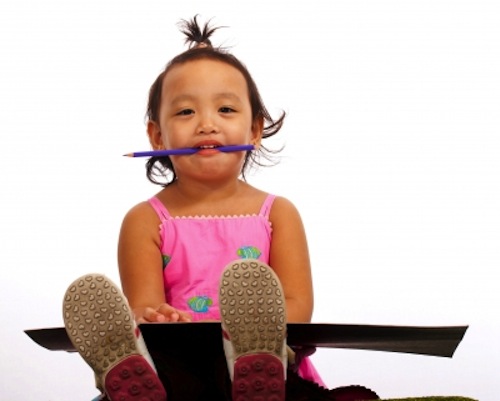
How early is too early to start your child in a school-based program? Can a two-year-old really gain anything from an early learning program? Are these programs really just daycares in disguise? These are all questions that may run through your mind when considering if you should enroll your child in an early preschool program, sometimes referred to as “Two’s programs.”
Don’t worry! Enrolling your two-year-old in an early learning program is neither too strict nor silly. Some benefits of early childhood education include:
-Improved social skills
-Practice interacting with adults
-Early intervention and the opportunity to spot any developmental delays
Here are some tips on what to look for if you decide to enroll your child in an early preschool program:
-Read reviews to get an idea of what’s available
-Visit the school to get a feel for the early program.
-Meet with the teacher and ask them about experience, background, and daily activities.
-Look for smaller group sizes. This is important, especially for little ones just starting out who aren’t used to learning in big group settings yet.
-Make sure the program offers plenty of communication through conferences, phone calls and any other form. This is an opportunity to learn about your child’s strengths, weaknesses and interests.
Sources:
-“What are the Benefits of Early Childhood Education?” LiveStrong
-“Early Preschool: Too Young for School?” Parenting.com
-Photo courtesy of Stuart Miles/freedigitalphotos.net


Latest Pins on Pinterest
-

-

easy baked ravioli recipe everyone will love! Also easy to pack inside a school lunch. with gluten free option
-

-

-

-

-

A fun and delicious breakfasty twist on salad!
-

No sew face mask project
-

Make your favorite Mac & Cheese recipe (or the box kind works nicely for this and the kids love it anyway ;). At the same time, throw together your normal Chili recipe (here’s a super easy chili recipe if you don’t have your own).
-

Make your favorite Mac & Cheese recipe (or the box kind works nicely for this and the kids love it anyway ;). At the same time, throw together your normal Chili recipe (here’s a super easy chili recipe if you don’t have your own).
-

Since we live in the country that is open to the brunt of all the weather (wind, wind and more wind), it is super important to provide the best support to garden plants right from the beginning. There is no “one best way” to do this. I usually work with whatever I have on hand as you can see from some of the included photos.
-

Since we live in the country that is open to the brunt of all the weather (wind, wind and more wind), it is super important to provide the best support to garden plants right from the beginning. There is no “one best way” to do this. I usually work with whatever I have on hand as you can see from some of the included photos.
