

5 Discipline Tips for Toddlers
15 February 2013
One comment

Trust us, we know there’s a reason for the phrase, “the terrible twos.” But good disciplining can help tame the twos, making your life easier and teaching your little one important discipline skills for later in life. Here are some tips on the often-confusing practice of teaching good behavior:
Tell the truth.
Avoid lies at all costs. It may be tempting to tell what seems like a white lie (ie: “Don’t go past that fence because there’s a monster on the other side.”) But young kids are extremely prone to repeating anything and everything that comes out of your mouth. Imagine explaining to your neighbor why your little one thinks he or she is a monster. It’s better just to tell the truth.
Remain consistent.
It holds true for everything from naps to snack time: toddlers do best with routine and order. It makes them feel safe, secure and helps them learn faster. If your child does something they shouldn’t, remind them not to and continue to do so each time they do afterward-even if you’re tired and it would be easier just to let them get away with it. Remember, “just this one time” is not a concept that toddlers easily grasp.
A little bribing never hurt anyone.
A lot of parents advise against bribing and it’s true that too much bribing can lead to spoiling, but there’s no harm in having a couple good bribes up your sleeve. Just remember that reinforcing good behavior is always better than discouraging bad so keep things positive. For example, instead of saying “If you stop that, I’ll give you a piece of candy,” say “We’ll go to the park after we go to the grocery store.”
Follow your own rules.
It’s a lot easier to say, “We only eat in the kitchen” than it is to say “You only eat in the kitchen, but mom can eat in front of the TV sometimes.” Set an example by following your own rules.
Avoid the need to discipline in the first place.
You know what gets your toddler worked up so avoid those stressful situations whenever possible. Make sure you don’t miss a nap or meal. Generally speaking, the less crabby toddlers are, the better they listen.
Sources:
-“7 Secrets of Toddler Discipline.” WebMD
-“8 Discipline Mistakes Parents Make.” Parenting.com
-Photo courtesy of David Castillo Dominici/freedigitalphotos.net

Happy Valentines Day! +Beautiful Hand Drawn Coloring Sheet
14 February 2013
No comments

Happy Valentines Day from the MomTrusted.com Team!
Just click the image above to download the printable coloring sheet.

Choosing the Right Daycare
14 February 2013
One comment
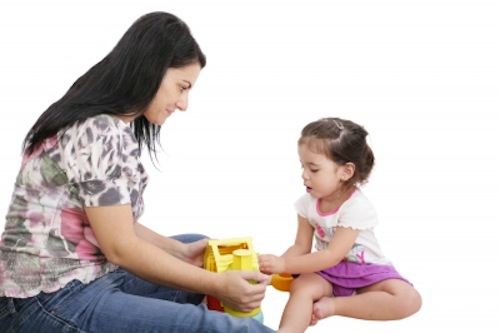 Choosing a daycare can be both overwhelming and scary. Whether you’re considering a care facility that a friend swears by or flipping through the yellow pages, it’s important to be well informed and highly involved with your selection process. When shopping for a new daycare, here are some of the most beneficial questions to ask:
Is the daycare licensed?
While most states do require childcare providers to fulfill licensing and background checks, not all do. Make sure that, whether the facility is located in a personal home or its own building, the caretaker is properly certified to watch your child. Do they have CPR training? How often must they pass inspections? Before committing to a daycare, contact your state’s childcare licensing resource to make sure it’s certified. Many states even have online tools that allow parents to search for certifications.
How long has the company been in business and how long have each of the caregivers been with the company?
Lower turnover rates generally mean a happy, expert-filled environment.
What is the adult to child ratio?
You want your child to be getting as much one-on-one time as possible. Not only does specialized attention keep your little one busy and engaged, but more adults means more safety. Here is the recommended adult to child ratios, based on children’s ages:
- Under two years old: 1:4
- Over two years old: 1:12, but no more than two of those children should be under one year old and not more than four under two years old
How big is the group size and what are the ages of the other children?
Generally, the smaller the group, the better because it means more attention for each child. After age two, it’s also important for your little one to be around other children his or her age. Because toddlers start socializing around this age, it’s valuable to set them in an environment where they’ll be around other tots at a similar level.
Do you get a good feeling from the center and staff?
Go with you gut. Visit the daycare in person so that you can meet the workers, see what the space looks like and check out the kind of activities the other children are participating in. If the facility looks good on paper and passes all of the questions above, but you still don’t feel completely comfortable committing, it’s probably not a good fit. Keep comparing your options.

10 Ways to Increase Brain Development in Babies
13 February 2013
One comment

Baby brains develop at a rapid rate. Infants’ neurological wiring holds a world of opportunities. Key development begins at an incredibly early age and stimulating your child’s mind could end up boosting their brainpower and shaping his or her intelligence for years to come. Here are 10 ways to help grow your baby’s intellect:
1. Grow a healthy brain before your baby’s born.
Staying as healthy as possible during pregnancy will give your baby-to-be the best shot at a healthy mind. Maintain a well-balanced diet, exercise, get plenty of sleep and schedule regular doctor appointments. Avoid medications that are known to harm fetal development because often, the brain is the first body part harmed.
2. Pay attention to your little one.
Children have a much higher chance of learning when their curiosity and observations are rewarded. Follow their gaze and comment on what they’re looking at, respond to pointing and describe what the two of you are checking out.
3. Converse with your baby.
Talk to your baby, even if he or she isn’t talking back just yet. Respond to baby talk and describe whatever you’re doing, whether it’s talking about making dinner or changing a diaper. This is how babies learn vocabulary and basic sentence structure.
4. Read to your little one.
Sparking an early interest in books and literature is essential to teaching language. Pick out books with large, colorful illustrations and simple story lines.
5. If your toddler is old enough to play, he or she is old enough to help clean up.
Enforcing cleanup early on introduces important concepts like responsibility and the idea of consequence. But remember, your toddler doesn’t know that cleaning up is a chore yet so make it fun! Sing a cleanup song while you work. Toddlers are eager to help and want to please so make a game out of cleaning up and always remember to thank your little helper.
6. Don’t shy away from a mess.
Scooping mud, splashing water and digging in sand is how little ones explore basic physics. Even though these messy ideas may seem like your worst nightmare, they’re essential for spiking your child’s curiosity and learning. Avoid disaster by making messy play extra structured and keep it outside. Then, when it’s cleanup time, head to the bathtub where your toddler can explore even more textures like slimy soap and a squishy sponge.
7. Allow for crawl space.
Many parents have a hard time letting their newly crawling babies run loose, but this is an important part of their development. Set up a safe, baby-proofed area, free of little objects and blocked off from stairs and sharp corners. Then let your baby run (or crawl) wild. This is how they can investigate the world around them and start to familiarize themselves with day-to-day objects.
8. Sing songs.
Songs are a fun way to learn. Children’s songs teach everything from the alphabet to animals to shapes and colors. They’re also a great way to pass times that may otherwise be boring for a little one. So next time you’re stuck in traffic, bust out your new secret weapon: the Itsy Bitsy Spider.
9. Use every opportunity to learn.
Sometimes parents forget that necessities, like meals or bath time, can be great learning opportunities to explore daily activities. So when you sit down to feed your baby, describe what he or she is eating. Is it fruit, a vegetable or something else? What’s it called? What color is it? Babies will begin to develop favorite tastes and learn to request them by name.
10. Remain positive whenever possible.
No matter how crabby, sleep-deprived and frustrated you get, try your hardest to remain positive. State rules clearly and, by all means, punish if you need to, but always try to reward good behavior. Often times, rewarding the good stuff will save you from having to punish the bad stuff later on.
Sources:
-“20 Ways to Boost Your Baby’s Brain Power.” Scholastic.
-Photo courtesy of Stuart Miles/freedigitalphotos.net

Diaper Bag Checklist
12 February 2013
No comments

photo from fao.com
With closets full of diapers, bottles stuffed in your cupboards and toys cluttering your countertops, it’s tough to know exactly what you should have in your diaper bag. You hear phrases about how moms always need to be prepared, but how can you possibly stuff all of that gear into one little (ok, maybe it’s closer to the size of a minivan than you’d like to admit) bag? Here’s a simple checklist to help you organize and prioritize what goes into your diaper bag:
Essentials
The essentials are items that you probably want to have on you at all times, regardless of where you’re going and for how long.
-Diapers (always at least one more than you think you need)
-Wipes (Tip: Save by buying in bulk and sticking them in ziplock bags “travel” bags)
-Plastic bags
-A changing pad
-Bottles and formula
-Snacks (toddlers)
-Sippy cup (toddlers)
-Backup outfit
-Blanket
-Sunscreen
-Pacifier (maybe throw in an extra one since little nooks tend to go missing often)
-Emergency info (better yet, store important information, like doctor’s phone numbers, in your cell phone)
-Favorite toy
-Diaper rash cream
-Bib
Extras
If you have extra space (haha) or plan on being away for a full day or more, consider taking a few more items.
-Extra clothing (and really extra of everything in the essential list)
-Pain relievers
-Comfort toy for your little one to nap with
-Hat if you’re going to be out in the sun
-Hat, mittens and other winter gear if it’s chilly out
-Nail clippers
-Camera
-First-aid kit
Sources:
-“Checklist: What to Put in Your Diaper Bag.” Baby Center
-“What to Keep in Your Baby Diaper Bag.” Parents.com
-“Diaper Bag Essentials.” Mom Advice
-Photo courtesy of digitalart/freedigitalphotos.net

Homemade Valentines for Kids
12 February 2013
No comments

With Valentine’s Day just around the corner, it’s time to start crafting cards. Looking for cute ideas for homemade valentines? Look no further! MomTrusted found some of the most creative card crafts for little ones:
Tissue Paper Valentines
Load up on pink, red and white sheets of tissue paper, construction paper and some glue. Cut big hearts out of the construction paper and cut the tissue paper into small squares- anywhere from two to four-inch squares will work perfectly. Then scrunch up each square one by one, dip it in glue and stick it onto the construction paper heart.
*Tip: To avoid a gooey mess, soak a sponge in glue and set it in plastic Tupperware. That way, children just have to press paper on the sponge, instead of aiming the sticky stream of glue.
Lollipop Butterfly Valentines
Cut the four wings of a simply shaped butterfly out of pink, purple or red construction paper. Fold the butterfly in half and tape a sucker along the crease so that the round part pops out over the paper (this part will be the butterfly’s head). Then glue two googly eyes onto the butterfly’s head. Encourage your kids to decorate the wings and help them write Valentine’s Day messages.
*Tip: If you plan on letting your little one do the cutting, make a stencil for them to follow for difficult shapes like the butterfly wings.
Candy Pillow Valentines
Staple two paper hearts together and stuff the paper pillow with a handful of candy like sweethearts, Skittles or M&Ms. Before you stuff the hearts, have your little ones decorate the outside with paint, markers and even glitter. Just remember to let the art dry before you start stapling and stuffing them.
*Safety tip: Leave the stapling to the grownups.
Sources:
-“7 Super Creative Valentine Ideas for Kids.” Momtastic
-“Valentine’s Day Craft for Kids.” Social Moms
-“Printable Valentines.” Skip to my Lou
-Photo courtesy of luigi diamanti/freedigitalphotos.net

New Study Shows Pacifiers May Stunt Emotional Growth in Boys
11 February 2013
No comments

Researchers at the University of Wisconsin, Madison found that pacifiers might stunt emotional development, but only in boys. Psychologists at Wisconsin led three experiments connected low emotional maturity to heavy pacifier use as a child.
Psychologists believe the nookies may make it difficult to imitate adult’s facial expressions, a skill that children are perfecting at the binky age. The theory held true for both the six and seven-year-olds and college-aged males that the researchers studied.
The six and seven-year-olds were measured by the amount they mimicked expressions on a video and college males took perspective taking tests. Both experiments were meant to mimic empathy. And in both cases, those who reported heavy pacifier use as children scored lower.
Girls, however, showed no direct correlations between emotional maturity and pacifier use as a child. It may be due to the fact that girls tend to develop earlier, but the reason remains a mystery.
This problem only occurs when facial expressions are being utilized. During times like nap and bedtimes, children are sleeping so expression mimicking is not happening. So even though it may be wise to wean boys off of binkies, this doesn’t mean that parents of baby boys should ditch pacifiers completely.
Sources:
-University of Wisconsin, Madison news releases. 9/18/12.
-Photo courtesy of Carlos Porto/freedigitalphotos.net


Latest Pins on Pinterest
-

-

easy baked ravioli recipe everyone will love! Also easy to pack inside a school lunch. with gluten free option
-

-

-

-

-

A fun and delicious breakfasty twist on salad!
-

No sew face mask project
-

Make your favorite Mac & Cheese recipe (or the box kind works nicely for this and the kids love it anyway ;). At the same time, throw together your normal Chili recipe (here’s a super easy chili recipe if you don’t have your own).
-

Make your favorite Mac & Cheese recipe (or the box kind works nicely for this and the kids love it anyway ;). At the same time, throw together your normal Chili recipe (here’s a super easy chili recipe if you don’t have your own).
-

Since we live in the country that is open to the brunt of all the weather (wind, wind and more wind), it is super important to provide the best support to garden plants right from the beginning. There is no “one best way” to do this. I usually work with whatever I have on hand as you can see from some of the included photos.
-

Since we live in the country that is open to the brunt of all the weather (wind, wind and more wind), it is super important to provide the best support to garden plants right from the beginning. There is no “one best way” to do this. I usually work with whatever I have on hand as you can see from some of the included photos.
