

CARE Fights Poverty, Helps Women and Families
13 November 2013
No comments
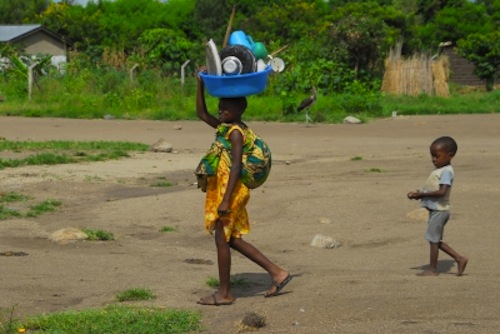
Cooperative for Assistance and Relief Everywhere better known as CARE works hard to fight poverty across the globe. The organization focuses specifically on women who are working to care for families and children. CARE workers believe that, with the right information, tools and resources, women can help by joining their side to fight poverty in each of her own communities. Some of the organization’s main focuses include stopping the spread of disease, providing clean water to communities, especially those with many women and children, protecting their natural environments and helping to expand business and economical opportunities in each of these communities.
Throughout the previous year, CARE assisted women in 84 countries across the world. Some of those countries included Afghanistan, Sudan, Peru, Uganda, India, Haiti and Cambodia. Staff members and volunteers of CARE want to make a global effort to empower women and families spread throughout the world, struck by poverty.
The organization is funded by government agencies here in the U.S. The United Nations and the European Union also assist financially, along with hundreds of thousands of private donors from individuals to large corporations.
While CARE doesn’t normally take on volunteers, they’re grateful to any financial assistance that individuals, families or companies can afford.
Their headquarters are located in Atlanta, Georgia.
Sources:
-CARE: http://www.care.org/index.asp
-Photo courtesy of Africa/freedigitalphotos.net

Educational Activities for Children with Down Syndrome
12 November 2013
No comments

Children with Down syndrome develop at a slower rate than most children without Down syndrome. They face challenges, such as being slower to learn how to talk and care for themselves. This certainly doesn’t mean these things are impossible. They just take a bit longer and some extra dedication. Here are some fun, educational activities for children with Down syndrome that will help make learning fun and a little less frustrating for little ones.
Use visuals to learn sounds.
Often, visual learning works best for children with Down syndrome. Sometimes, sign language can help little ones communicate and learn verbal language. You can either learn actual sign language or invent your own. For example, maybe touching the mouth represents hunger.
Take turns.
Teaching a child with Down syndrome to take turns can amplify learning experiences. Communication relies heavily on taking turns, having a listener and a speaker, but sometimes this concept doesn’t come naturally. Demonstrating this turn taking and even verbally communicating “OK now it’s my turn” can help the learning process happen a bit faster.
Use repetition to your advantage.
Studies show that kids with Down syndrome usually need at least a 100-word vocabulary before they start transitioning from one-word statements to multi-word thoughts. Repetition can help accelerate learning to speak. Think of it as an add-on game. If the child says, “Car,” say, “Car. Fast car.”
Sources:
-“Down Syndrome” Kids Health: http://kidshealth.org/kid/health_problems/birth_defect/down_syndrome.html
-“12 Booster Activities for Kids with Down Syndrome” Parents.com: http://www.parents.com/health/down-syndrome/booster-activities-for-kids-with-down-syndrome/
-“Down Syndrome Learning Activities” Pinerest: http://www.pinterest.com/trudycallan/down-syndrome-learning-activities/
-“Top Five Instructional Strategies for Students with Down Syndrome” Special Ed Post: http://specialedpost.com/2013/01/31/top-five-instructional-strategies-for-students-with-down-syndrome/
-Photo courtesy of kdshutterman,/freedigitalphotos.net

Rewild the Child: Learning Outside of the Classroom
21 October 2013
No comments
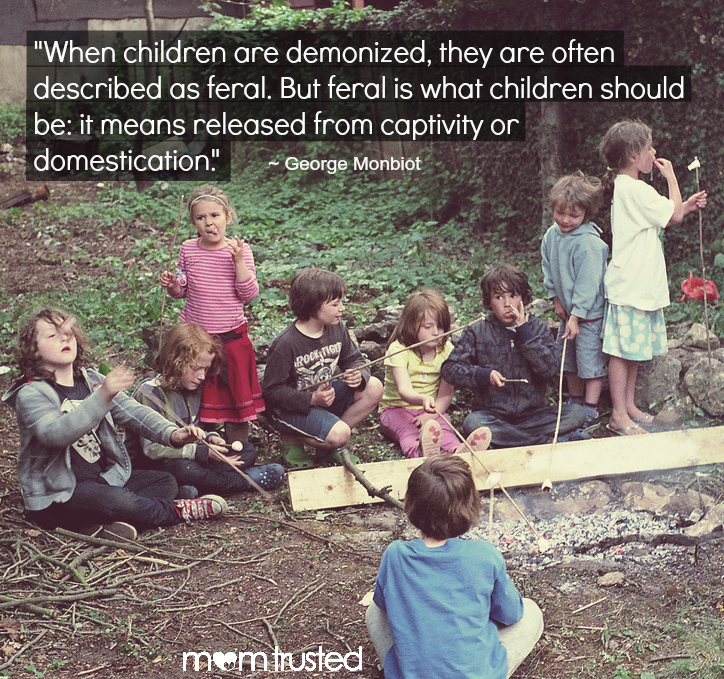
The idea of hands-on learning has been around for ages. But now, multiple studies are showing what we suspected all along: learning outside of the classroom is the best kind of learning around. It improves test scores, memory retention and overall attitude. Even learning the stuff in the books in the country side proves better than lining students up in desks.
King’s College London, one of the leading research universities in the world, found that learning in a natural environment ups performance in nearly all subject areas, including math, reading, social studies and science. According to the study performed by King’s College London, exploring their surrounding gets kids excited about learning, amping up their information intake and overall test skills.
According to author Stuart Nundy’s book Raising Achievement Through the Environment, learning outdoors, in open country, was actually found to improve memory. These are just a couple examples, among a slew of research that points toward one answer: keeping kids in the classroom is not the way to learn.
According to multiple studies, scientists and authors, kids learn better outside of the classroom, taking advantage of hands-on activities. Plain and simple. George Monbiot breaks it all down for readers in his recent article, “Rewild the Child.”
READ THE FULL ARTICLE HERE: “REWILD THE CHILD” BY GEORGE MONBIOT.
Sources:
-“Rewild the Child” George Monbiot: http://www.monbiot.com/2013/10/07/rewild-the-child/
-“Understanding the diverse benefits of learning in natural environments” King’s College London: http://www.naturalengland.org.uk/Images/KCL-LINE-benefits_tcm6-31078.pdf
-Photo courtesy of jonny2love

How the Government Shutdown Affected Kids and Moms
15 October 2013
No comments

Mom Trusted reports on how the government shutdown affected kids and moms here:
The government shutdown affected kids and moms as it blew through the country, shutting down federally funded programs left and right on the first of October. Many federally funded Head Start programs, which offer free preschool to kids under five, ran out of funding at the end of September. Those that couldn’t afford to stay open through other channels of income were forced to send preschoolers home indefinitely. Head Start programs in Florida, Alabama, Connecticut and Mississippi were among those forced to close, hitting 3,200 preschoolers by the day after the shutdown.
The government shutdown affected kids and moms of all ages, not just those in preschool. Programs labeled “non-essential” were the ones forced to close with the shutdown. Among the many hit was the WIC, the Special Supplement Nutrition Program for Women, Infants and Children. The WIC provides healthy food for low-income moms and moms-to-be with children under five years old.
Nearly nine million women and children participate in the program and receive an average monthly benefit of $45. By providing healthy food to children, the program hopes to cut medical costs in the future. For every $1 spent on WIC, the program will save over $4 in medical bills.
Many program workers and parents who depend on WIC argue that the program is the opposite of “non-essential.”
Sources:
-“Shutdown threatens nutrition for mothers, children” CNN Money: http://money.cnn.com/2013/09/30/news/economy/shutdown-wic/index.html
-“WIC support for moms, babies threatened during shutdown” CBS News: http://www.cbsnews.com/8301-250_162-57605501/wic-support-for-moms-babies-threatened-during-shutdown/
-“Low-income moms and infants will see support disappear in a shutdown” Think Progress: http://thinkprogress.org/economy/2013/09/30/2701131/shutdown-wic/
-Photo courtesy of adamr/freedigitalphotos.net

Amber Alert Site Went Back Up After Taken Down During Government Shutdown
14 October 2013
No comments

The government shutdown closed plenty of questionably “non-essential” government programs. Among them, the federally funded preschool program Head Start. When funding didn’t come through as expected on October 1, many of the programs scattered in states across the country were forced to close their doors. Parents across the nation were appalled, but not as appalled as when they saw the Amber Alert site had been taken down as part of the shutdown.
Amber Alert deals with alerts about abducted children. Although the system itself was never put on pause, the website did go down for a few days. Workers at the Justice Department said the event was a misunderstanding, blown out of proportion by the media. Officials said that after the funding was halted with the shutdown, they were no longer able to afford to pay enough staff to monitor the site. They thought it safer to put up a firewall to prevent any security issues.
The Justice Department pointed out that the site is not one ever used by law enforcement officials to help locate missing children. The Amber Alert system was never stopped, cut or interrupted at all. The website is only informational, meant to inform citizens of the department’s role. The Amber Alert system itself is more made up of outreach methods, including highway signs and tweets.
Despite all of these points, the website was restored shortly after it went down. After a wave of bad press and outraged parents spoke out about its unavailability, the Justice Department decided to reinstate the Amber Alert website.
Sources:
-Amber Alert: http://www.amberalert.gov/
-“After bad press confusion, Justice Department restores federal Amber Alert website” CNN: http://thelead.blogs.cnn.com/2013/10/07/after-bad-press-and-confusion-justice-department-restores-federal-amber-alert-website/
-“Amber Alert website brought back online after outcry” Fox News: http://www.foxnews.com/politics/2013/10/07/amber-alert-website-brought-back-online-after-outcry/
-Photo courtesy of Clare Bloomfield/freedigitalphotos.net

Online Safety for Kids: Resources to Keep Your Children Safe Online
25 September 2013
No comments

Kids are hitting cyber space at younger ages than ever before. Of the children under five who do use the World Wide Web, 80 percent of them log on at least once each week. With everything from inappropriate content to online bullying scattering the web, the Internet has become a risky place for little ones. That’s why it’s more important than ever to monitor what kids are searching, where they’re clicking and make sure they know how to keep themselves safe online.
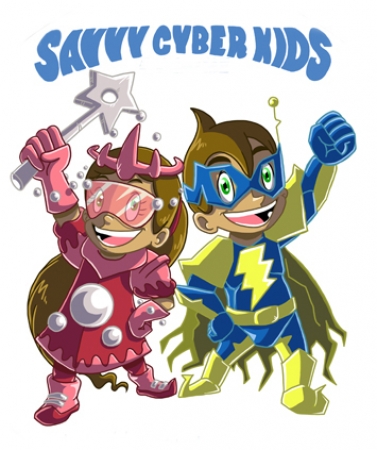
To kick off National Cyber Security Awareness Month, we want to introduce our friends at Savvy Cyber Kids. This wonderful non-profit works to teach children how to be safe online before they sit down in front of the screen.
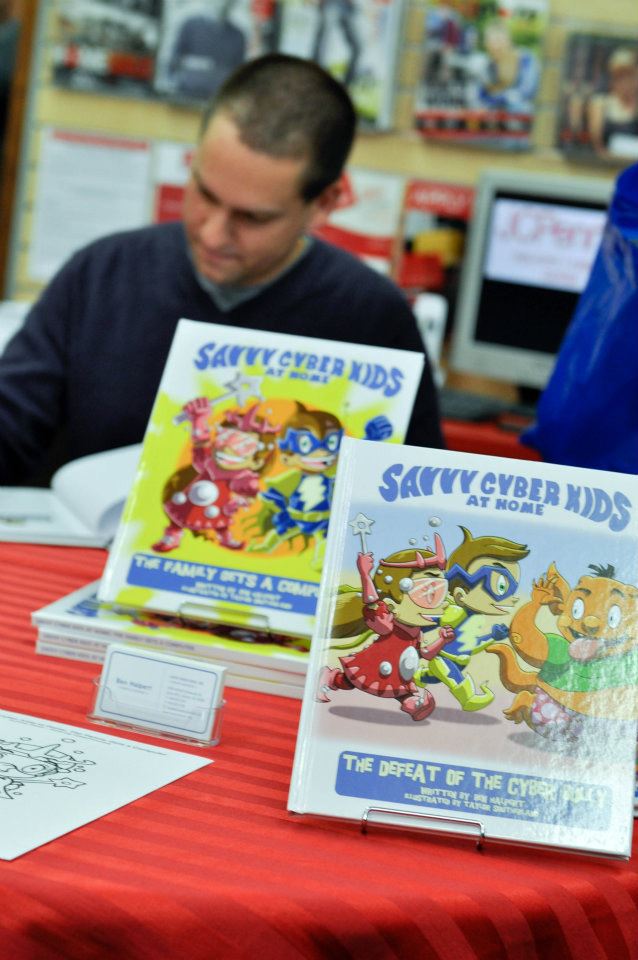
Savvy Cyber Kids produces books and lesson plans for teaching online safety for kids. Their curriculum covers a wide range of online risks; from cyber bullying to privacy to online ethics.
Online downloads for teachers include both lesson plans and activity sheets, such as “Create Two Trusted Adults” and “Coloring Cyber Princess.” Books focus on a family buying their first computer, strangers online, privacy and defeating a bully, at school, at the playground, and online.
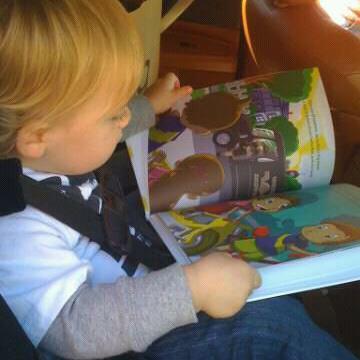
The internet is a wonderful learning tool for kids…just don’t forget to teach your children to stop and think before they connect!
Join Savvy Cyber Kids in helping kids stay save online here: Facebook and Twitter.
Sources:
-National Cyber Security Month: http://www.dhs.gov/national-cyber-security-awareness-month
-Savvy Cyber Kids: http://savvycyberkids.org/
-“How are online issues affecting children?” National Center for Missing and Exploited Children: http://www.netsmartz.org/safety/statistics
-“Statistics on Online Safety” NSPCC: http://www.nspcc.org.uk/Inform/resourcesforprofessionals/onlinesafety/statistics-online-safety_wda93975.html
-Photo courtesy of Clare Bloomfield/freedigital photos.net

Play Based Learning
13 September 2013
No comments
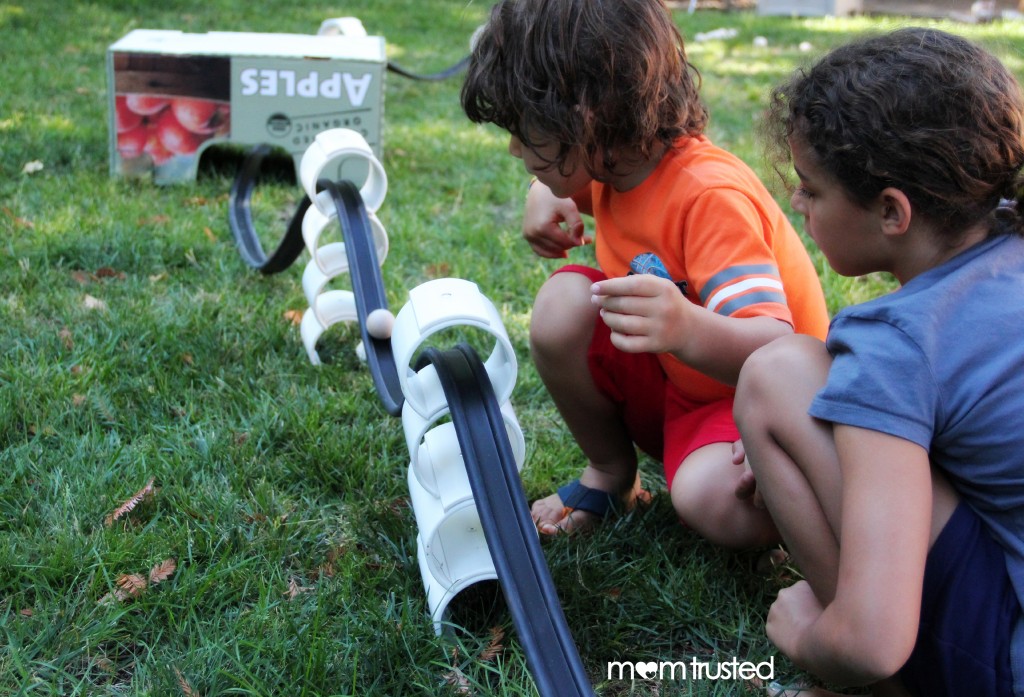
As teachers, care providers and parents, you know better than anyone that kids learn best through hands-on or play based learning. Our friends at Kodo Kids know that hands-on play is not only extremely educational, but also the most fun way to learn. That’s why they produce products that promote investigation and exploration.

As childhood expert Bev Bos would say, “If it’s not in the hand, it’s not in the head.” At Mom Trusted, we agree with Kodo Kids’ learning philosophy. Open-ended play is an important learning style for children of all ages. It helps create a deep understanding of the material introduced to them. This hands-on, play approach is especially important during early education, when children are just starting to discover and create their learning style, along with the world around them.

Products from Kodo Kids range anywhere from Digger Kits, designed to encourage outdoor play and learning by digging, burying and sifting through sand and soil, to Kodo Clay, an all-natural product meant for art and expression. There’s a magnetic filling kit that teaches kids about magnetism and iron particles. Kodo Kids even has Pump Works, a kit of water tubes that lets children test out their engineering and water pumping skills.
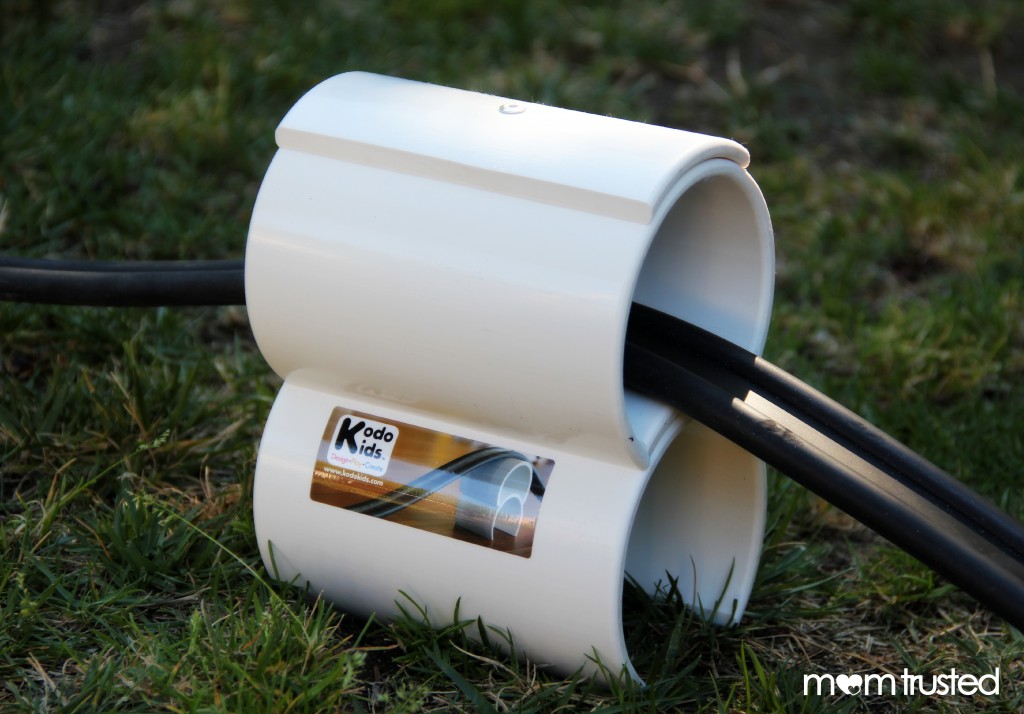
How do we know Kodo Kids’ products are great? They sent us some and we loved them! With a wide variety of tools, toys and gadgets, any teacher, child care provider, or parent is sure to find something right up their alley that suits their individual teaching or parenting style. Visit Kodo Kids’ products for yourself today to see just how great hands-on learning can be!


Latest Pins on Pinterest
-

-

easy baked ravioli recipe everyone will love! Also easy to pack inside a school lunch. with gluten free option
-

-

-

-

-

A fun and delicious breakfasty twist on salad!
-

No sew face mask project
-

Make your favorite Mac & Cheese recipe (or the box kind works nicely for this and the kids love it anyway ;). At the same time, throw together your normal Chili recipe (here’s a super easy chili recipe if you don’t have your own).
-

Make your favorite Mac & Cheese recipe (or the box kind works nicely for this and the kids love it anyway ;). At the same time, throw together your normal Chili recipe (here’s a super easy chili recipe if you don’t have your own).
-

Since we live in the country that is open to the brunt of all the weather (wind, wind and more wind), it is super important to provide the best support to garden plants right from the beginning. There is no “one best way” to do this. I usually work with whatever I have on hand as you can see from some of the included photos.
-

Since we live in the country that is open to the brunt of all the weather (wind, wind and more wind), it is super important to provide the best support to garden plants right from the beginning. There is no “one best way” to do this. I usually work with whatever I have on hand as you can see from some of the included photos.
