

10 Signs that You Found the Best Daycare
29 March 2013
No comments

You hunted high and low, near and far to find the perfect daycare for your child. You’re pretty sure you did a good job and overall are pleased with your pick, but every now and then a gnawing pang of worry pops into your stomach. How can you be sure you made the right choice? Here are a few signs that tell you that you found the best daycare possible:
1. The staff calls both you and your child by your names when you arrive. And they remember to ask things like, “How was the camping trip this weekend?”
2. Your good friend, family member or trusted coworker highly recommended the place.
3. There are lots of staff member and the worker to child ratio is very high, allowing for more one-on-one attention.
4. They have one of those annoying lists of rules that prohibit things like peanuts. Although often long and sometimes irritating, those rules mean that the daycare really cares about your child’s health and safety.
5. You checked with the state and they meet all of the health and safety codes.
6. They remind you when you’re running low on diapers or let you know when your child didn’t finish eating. Communication is priceless.
7. The daycare doesn’t offer unwanted advice too often. While you want to stay in the loop and know what’s going on, you probably don’t want someone telling you how to parent.
8. Parents of the other children seem friendly and you’ve either already organized play dates or are planning to soon.
9. The daycare has a low turnover rate. That’s how you know the staff loves what they do and care about their work.
10. Your child comes back from daycare excited. Don’t worry if he or she is hesitant to go in the morning; that’s perfectly normal. But if they come home bubbly and thrilled to tell you about all the cool stuff they did, you know you’ve got a winner on your hands.
Sources:
-“8 Tips for Choosing Child Care.” Parents.com
-“What Makes a Great Daycare.” Parents.com
-“Daycare Dilemmas.” Parents.com
-Photo courtesy of photo stock/freedigitalphotos.net

5 Reasons to Avoid Buying Live Animals for Easter
28 March 2013
No comments
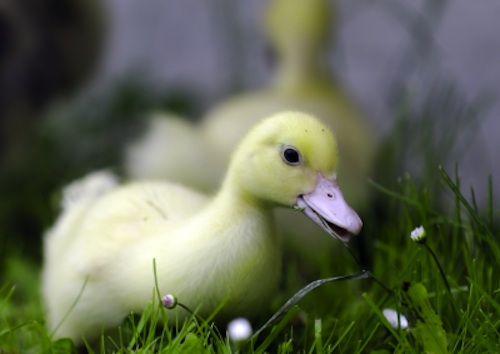
Even though baby bunnies, chicks and ducklings are cute and cuddly, here are the top five reasons why you should avoid buying living animals for Easter:
5. They may carry germs or diseases. You don’t want to stuff them in a basket with a bunch of food.
4. Do you really want to clean up all of that poop? Seriously. Chickens and ducks aren’t indoor pets and, while rabbits can be trained, at the end of the day you know that the new pets will be your new responsibility.
3. Baby animals are delicate. They may be scared by a bunch of kids constantly touching them. Plus, they’re so tiny and sometimes little ones get excited and forget to be gentle with their new fluffy friends.
2. What about all of those supplies? You can’t buy just the animal. You need the food, the water dish, the cage and the vet visits. Just like a dog or a cat, pet bills add up quickly.
1. They will grow up. It’s unfair to adopt animals for a special holiday because they’re cute and cuddly. Eventually they’ll grow up and then what? Do you really want a chicken running around your house?
Bottom line: Stick to goodies and projects this Easter!
Sources:
-“CDC Warns Against Live Chicks, Duckling, Bunnies for Easter” Yahoo! Voices
-“Live chicks and ducklings bad idea for Easter” Examiner
-Photo courtesy of dan/freedigitalphotos.net

Mommy Math: Children and Reading
27 March 2013
No comments
Did you know that the amount of parents who read to their pre-kindergarteners daily has decreased by 5% in recent years? Yet college enrollment seems to be on the up-and-up or at least it was until 2010. MomTrusted digs into the statistics behind children and reading, from reading scores to college enrollment:

Easter Crafts for Kids
26 March 2013
No comments

What’s cuter than baby chicks and bunny ears? Your little one making Easter crafts! Mom Trusted rounded up a few simple Easter crafts for kids to try out this year:
Forever Easter eggs
This year, dye Easter eggs that won’t go bad. Take an uncooked egg and shake it hard for about a minute. Then have an adult use a thick needle or pin to poke a hole on each end of the egg. The grownup can then blow the contents of the egg into a bowl (Voila! Omelets for breakfast!). Dye the eggs as you normally would and after they dry, you have beautiful decorations that bring splashes of color to your home and don’t need to be refrigerated.
Fluffy bunnies
Make fluffy bunnies using construction paper and cotton balls. First, glue two to four cotton balls together to create the body. Then, glue one on top to be the head. Next, divide one cotton ball into fourths, gluing each part on to represent a foot. Take construction paper to cut out two small rabbit ears to glue onto the fluff balls. Finally, add a couple mini googly eyes.
Striped eggs
Spice up your regular egg dying by adding stripes to your family’s eggs! Help your kids separate the dye colors into three categories: light, medium and dark. Then, take a hardboiled egg and dip it in the lightest dye. Let it dry. Wrap a rubber band around the egg, spreading it out to create a crisscrossing design. Dip in the medium dye. Let it dry. Finally, add another one or two rubber bands and dunk the egg in the dark dye. You’ll have a batch of rainbow-striped eggs.
Eggshell flowerpots
Break off the top third of a dozen eggs and empty the yolks out. Discard the tops. Wash or thoroughly rinse out the bottom two-thirds of the eggshells. Fill with dirt and plant a few seeds in each. Place them back into an egg carton to help them stand upright. Then water and set them in a sunny spot.
Sources:
-“Eggshell Flowerpots” Martha Stewart
-“Kids’ Easter Crafts” Spoonful
-“Easter Activities for Children” DLTK
-Photo courtesy of Grant Cochrane/freedigitalphotos.net

Milestones for 12-17 Months
25 March 2013
No comments
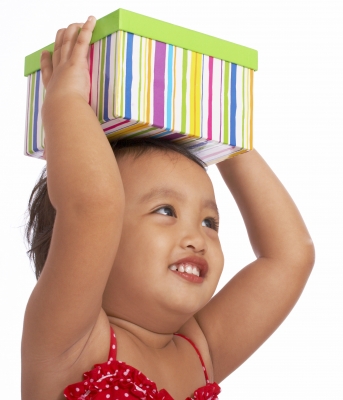
Once your child hits one year, they’ll continue to develop emotionally, physically and cognitively at a rapid rate. Between 12 and 17 months, children start to master skills like running and the ability to follow instructions. Remember that each child develops at his or her own pace so don’t worry if they’re not exactly on track. Here’s a simple breakdown of what milestones to look forward to during these exciting months:
Physical milestones
-Starts showing signs of right or left-handedness
-“Helps” you dress him or her by holding their arms out
-Bends to pick up toys, showing increased coordination
-Eats with his or her hands
-Points
-Starts running
Emotional milestones
-Becomes attached to a favorite stuffed animal or blanket
-Loves playing games
-Develops favorite foods and dislikes others
-Enjoys interacting with other children
Cognitive milestones
-Perfects a couple words and continues to work on others
-Recognizes (and loves) his or her reflection
-Develops the ability to follow simple instructions
-Has a shorter attention span (don’t worry! This is normal)
-Plays pretend
-Sorts toys and other objects by shape, size and color
Sources:
-“Toddler Milestones: 12-17 Months.” Parents.com
-“Developmental: 12 to 15 months.” Parenting Weekly
-Photo courtesy of Stuart Miles/freedigitalphotos.net

Mommy Math: Single Parents
20 March 2013
No comments
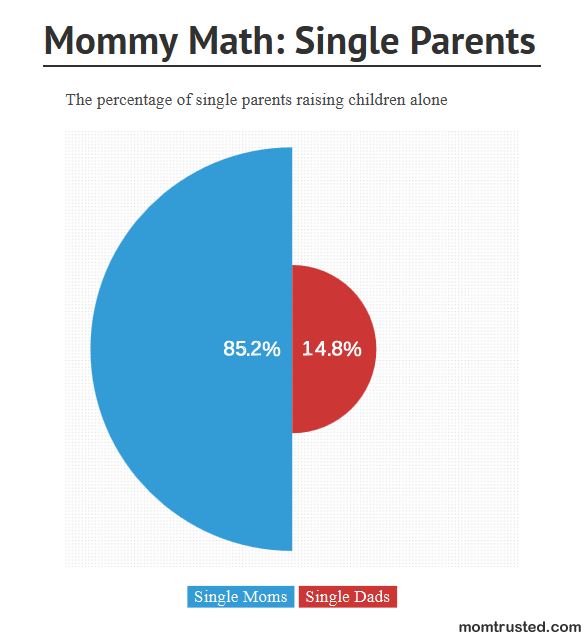
We live in a country where single parenting is far from rare. In the U.S., there are 13.6 million single parents and 21.2 million children being raised by only one parent. That makes up 26% of young people and children in the country. While it used to rest primarily in the mother’s hands to care for a child, the amount of single fathers had grown 60% in the last decade. However, despite the large growth in single fathers raising children, single moms are still much more common.
Sources:
-“Single Parent Statistics” Single Parent
-“Single Mother Statistics” Single Mother Guide

New Study Finds Happier Kids
14 March 2013
No comments

A new study found that kids who perform acts of kindness are happier and more accepting.
Researchers in Vancouver, Canada studied how performing kind acts influenced behavior, emotions and even popularity of 9 to 11 year-olds. The researchers had two groups: one was asked to visit three places each week, while the other was asked to perform three random acts of kindness each week.
The experiment lasted for four weeks and, in the end, when compared to previous test results, both groups of children were deemed happier. The ones who performed random acts of kindness, however, were also deemed more accepting of their fellow classmates.
Researchers believe that because the acts of kindness were intentional and planned, they created more positive, accepting attitudes among the children. Observers believe that this could be a solution to bullying in schools. By encouraging kind acts in children and creating more open-minded attitudes, the hope is that the acceptance will spread throughout school children.
Sources:
-“Acts of Kindness Make Kids Popular.” Parenting.com
-“Random Acts of Kindness Can Make Kids More Popular.” NPR
-Photo courtesy of Ambro/freedigitalphotos.net


Latest Pins on Pinterest
-

-

easy baked ravioli recipe everyone will love! Also easy to pack inside a school lunch. with gluten free option
-

-

-

-

-

A fun and delicious breakfasty twist on salad!
-

No sew face mask project
-

Make your favorite Mac & Cheese recipe (or the box kind works nicely for this and the kids love it anyway ;). At the same time, throw together your normal Chili recipe (here’s a super easy chili recipe if you don’t have your own).
-

Make your favorite Mac & Cheese recipe (or the box kind works nicely for this and the kids love it anyway ;). At the same time, throw together your normal Chili recipe (here’s a super easy chili recipe if you don’t have your own).
-

Since we live in the country that is open to the brunt of all the weather (wind, wind and more wind), it is super important to provide the best support to garden plants right from the beginning. There is no “one best way” to do this. I usually work with whatever I have on hand as you can see from some of the included photos.
-

Since we live in the country that is open to the brunt of all the weather (wind, wind and more wind), it is super important to provide the best support to garden plants right from the beginning. There is no “one best way” to do this. I usually work with whatever I have on hand as you can see from some of the included photos.
