

Bridging the Communication Gap Between Parents and Care Providers
26 February 2014
No comments
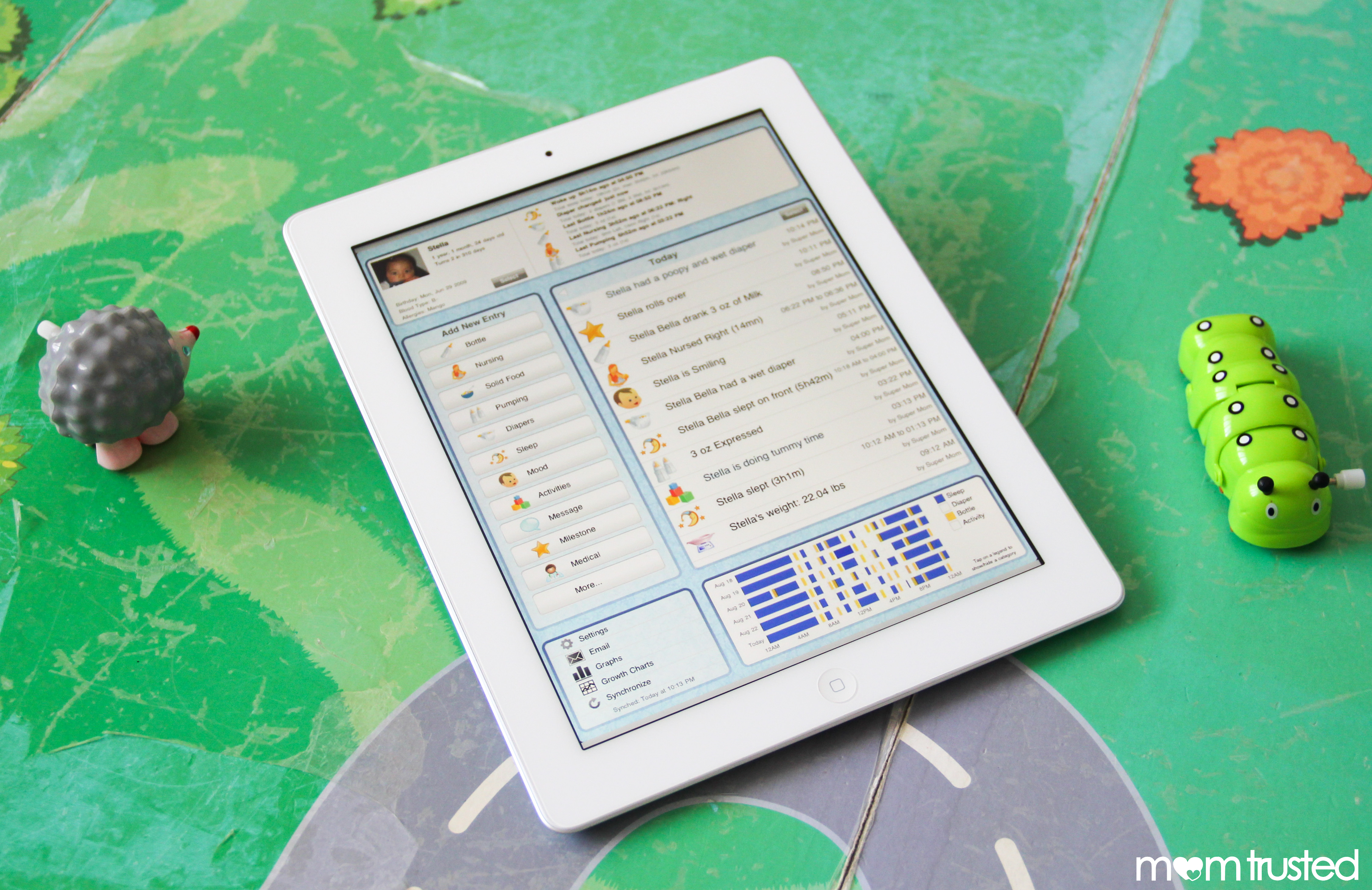
Finally! Child care providers can connect more easily with parents, keeping them up-to-date on their children’s day-to-day care with an innovative application called Daily Connect. The mobile and web application gives parents and care providers the ability to easily record everything from naps, feeding and diapers to mood, activities or sickness. You can even take pictures and record the type of games each child is playing. Parents automatically receive real-time updates via the application and a daily email summary at the end of the day.

Daily Connect eases the mind of worried parents, and helps bridge the communication gap between child care providers and parents. When picking up their children at the end of the day, parents already have all the details about their kids routine and can discuss more important matters with the caregivers. The app provides a less disruptive way to interact with the caregiver, with less phone calls during diaper changes or feedings. This is also a great tool for tracking data over time and helping ease the transition between caregivers during shift changes. Because it’s quick and easy to enter information on Daily Connect, the data will be more accurate than it would be on a traditional, hand-written information daily sheet.

Parents can also use the application to record events while the child is at home, for instance sleep duration, wake up time and breakfast time are very useful information for child care providers.

The handy app even has extra features that cater to those managing large child care centers: Attendance reports, classroom and teacher management help directors of child care centers make sure everyone is where they need to be. Customize the app with your own company’s branding to create a seamless experience for parents.
The best part? Daily Connect believes in providing the best customer service possible. Feel free to email them if you have any question or issue, they’ll respond to all emails the same day.
Daily Connect is available on iPhone, iPad, Android and as a free web application. And, because we think this app should be the next tool in every child care provider’s tool belt, Daily Connect agreed to a special deal for MomTrusted members: for all their premium plan, the first month is free and the 3 following months are 30% off with the coupon MOMTRUSTED.
If you’re a parent, ask your child care provider to use Daily Connect!
Bridging the communication gap between parents and care providers
01 February 2014
No comments
Child care providers can now connect more easily with parents, keeping them up-to-date on their children’s day-to-day care with Daily Connect. And, because we think this app could be the next tool in every child care provider’s tool belt, we want to offer it to you for {SPECIAL DISCOUNT}
The mobile and web app gives care providers the opportunity to record everything from naps, milestones and diapers to mood, location and temperature. You can even photograph and record the type of games each child is playing.
Daily Connect eases the mind of worried parents, and helps bridge the communication gap between child care provider and parent. Instead of calling to check in, parents can simply view the app, leaving the care provider free to care for the children. This is also a great tool for tracking data over time and helping ease the transition between caregivers during shift switches. Because it’s quick and easy to enter information on Daily Connect, the data will be more accurate than it would be on a traditional, hand-written information daily sheet.
The handy app even has extra features that cater to those managing large child care centers on its web app. Attendance reports and classroom and teacher management help directors of child care centers make sure everyone is where they need to be. Even customize the app with your own company’s branding. Those interested in managing large groups through a Professional Membership get to try their first month for free.
If the idea of getting started in a little daunting and you don’t want to sacrifice the data you’ve already gathered, don’t worry. Daily Connect is happy to help. Simply forward Daily Connect the documents with your children’s information and they’ll upload it into the system, so you’ll be ready to get started in no time.
For iPhones, download the app {instructions and code}
If you’d like it on your iPad, download Daily Connect {instructions and code}
It’s also available for Android phones, as well as on your regular, every-day browser.
The best part? Daily Connect believes in providing the best customer service possible. That means that if you hit any bumps in the road, feel free to reach out, and they’ll give you a hand. In fact, they’re so eager to help that they’ll respond to any and all customer support emails the same day you send them.
How Parents Can Use CHALK Preschool
01 February 2014
No comments
Whether your child is already enrolled in a separate preschool program, starting next year or learning at home until they begin kindergarten, the CHALK Preschool online curriculum can help children expand and enhance their early education for free. All you need is your computer, smartphone or tablet to enroll and get started.
The CHALK Curriculum
CHALK Preschool focuses on preparing preschoolers for kindergarten. Lessons revolve around learning numbers, letters, shapes, sizes, colors, pattern recognition, weather, days of the week and more. The best part? There’s constantly new, challenging material for your little one. With a new lesson list every day, your child can expand his or her knowledge by exploring new games, songs and activities.
The CHALK Learning Approach
Despite being an online program, CHALK Preschool is about much more than sitting in front of a screen, clicking a computer mouse. The curriculum is centered on hands-on learning, involving both indoor and outdoor play and discovery. From art projects to song and dance, CHALK gets little ones up and moving, learning through exploration, the way that they learn best.
Here’s how to use CHALK Preschool to enhance your child’s learning:
1. Enroll
To get started, all you need to do is enter your email information and your child’s name and birthday on CHALK’s website.
2. Select a lesson to focus on.
Choose a topic on the left hand side of the screen. You can opt for dailies, which changes every day, weather, literacy, math and science or art. Each comes with videos, games or activities. Some even feature all three.
3. Print off printables.
Next, check out the printables available on the left side of the screen, under the lesson options. Here you’ll find coloring sheets, graphs and more that your child can draw or write on.
4. Free play!
If your little one still wants to learn and you’ve already covered his or her daily lesson plan, click on the free play link on the top right of the screen. Here, you and your little one can watch videos and learn fun, educational songs to sing along with.
5. Stop by the Parent Portal.
This section of the website, located on the top right of the screen, is completely dedicated to parents like you. Here, you can learn more about the CHALK Preschool program and leave helpful feedback for the staff. You can also head to the advice corner to find helpful tips on everything from teaching about manners to helping smooth out the bedtime routine.
The Master List of Questions to Ask When Seeking Boston Care
24 January 2014
No comments

Are you a working parent in Massachusetts seeking Cambridge daycare or Boston care? The Boston area offers one of the most extensive child care opportunities out of cities across the country. After you’ve sorted through your options, using Mom Trusted’s search tool, picked your favorites and set up tours with your top choices, it’s time to lay out the questions to ask to figure out if you’re choosing the best Boston care option for your little ones. Here’s what to ask:
Fundamentals:
How long have you been in business?
What are your hours?
How is vacation time handled?
Safety:
Are you properly licensed with the state?
Are all of your staff members CPR and First Aid certified?
Are staff members required to go through background checks before hiring?
How would you handle a missing child?
The Numbers Game:
How much will it cost for my child to attend?
What is your late policy?
How is billing handled?
How many staff members are there?
What’s the child-to-teacher ratio?
How many of your staff members are required to hold a degree?
Food and Health:
What’s your sick policy?
Are there any food restrictions?
My child is allergic to ____. How would you deal with his or her allergy?
How are snack and mealtimes handled?
What type of food do you serve?
How does nap time work?
Learning Style:
Which teaching philosophy do you follow here?
In terms of learning, which approach do you find to be most effective?
What are some of the main subjects you focus on throughout an average day?
Behavior:
How do you deal with disciplining here?
Do you believe in spanking?
My child struggles with ____ and this is how we handle it at home: _____. Could you respect and continue to enforce our rules?
How do you handle potty training?
What do you expect from me as a parent?
Environment:
Can you describe an average day to me here?
How much time is spent inside versus out?
What is your policy on TV and computer time?
Can you show me some crafts kids here have made?
Can you describe some of the games children play here?
Sources:
-“Home daycare provider interview” Baby Center
-“Questions to Ask When Choosing Child Care” Al.com
-“Questions to Ask a Home-Based Daycare Provider” PDX
Photo By lee
Arts Based Early Education
07 January 2014
One comment
As a substitute teacher, I sure have encountered a lot of different education programs. I’ve been at big and small schools, public and private, and have taught early education through high school. While a one-off day at a school is usually quickly forgotten, getting to see (and briefly be a part of) a really impressive program is a treat!
Recently, I spent the day teaching for the Kaleidoscope Program at Settlement Music School in Philadelphia. My background (and my heart) is in Art Education, so I jump at any chance to work in an arts based early education environment – especially an award winning community based school in my own hood!
Throughout my day, I was excited to see young kids (pre-K) who were really getting a well rounded arts education! The kids in my art classes had obviously been exposed to the “elements of design”, and were comfortable with some fairly advanced color theory. The day I spent with them, we were working with hot and cool colors. The students definitely had both the knowledge and vocabulary to talk about their own and others’ art work.
I was also able to observe the Kaleidoscope Plus program, Settlement’s new after-school program. Much like the day program, Kaleidoscope Plus has a major focus on the arts – visual arts, music, theater and dance. In my experience, there are some major benefits to presenting art, music, and movement in an integrated curriculum. Students gain skills in all areas – learning principles of art, developing fine motor skills, enhancing their listening skills and music making abilities, and moving their bodies in controlled and intentional ways.

Above, students are enthusiastically engage in a game of “Freeze Dance Party “ – accompanied by live music! Even some of the shyest kids were socializing in this dance game!
This cross-disciplinary approach allows broader topics and themes to be explored. Over the course of this school year, Kaleidoscope Plus kids will be learning and creating around three major themes – myself, my community, my world. While I was visiting, students we’re focusing on “myself”. In the choice-based art classroom, this meant learning about our bodies and making a larger-than-life skeleton. (I do love a good 3-d project!)
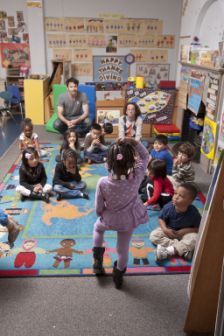
On the more “dramatic” side of things, kids learned about storytelling, which culminated in mini-performances to rapt audiences of their peers. It’s obvious that these guys are confident in front of a group!

Here, kids participate in favorite game “mirror” – learning about the expressions they can make with their faces.
Overall, it was charming and fun to spend an afternoon with kids that were really learning – while not losing sight of the main focus: play. It was awesome to see kids really interacting, creating, and expressing themselves all afternoon. I found myself wishing I had been in a program like this when I was that little!
More information on Kaleidoscope Plus (including their mission statement, and enrollment pages) is available here. You can still enroll or start in January, after the holidays!
Family Fitness: Staying Fit as a Family
16 December 2013
No comments

Looking for a fresh start to 2014? What could be better than working on your family fitness by spending some quality together? Here are some family friendly activities that involve exercise, but are guaranteed to be more fun than the gym:
Bike
Grab everyone in the family a bike and set off on a two-wheel adventure. If your kids haven’t mastered the balancing technique yet, throw on some training wheels. And if your little one is way too little to pedal on his or her own, invest in a bike with a child seat or a child trailer so even the smallest munchkins can join in on the fun. Plus, you don’t just have to bike on adventures. You can use your new wheels for running errands too.
Take a hike
Let your little ones lose in the great outdoors. Go on a backpacking trip together. If you just go for a night or two, you shouldn’t need too much gear, but should be able to explore beautiful sites while staying active. If you’re worried about your little one on the path, consider a baby carrier to strap to your chest or just taking a day hike.
Play ball
It doesn’t matter if it’s soccer, football, baseball or any other sport. The point is that you’re all moving and having fun as a family. Get out in your back yard and throw a ball around. Invite neighborhood families too! The bigger the teams, the better.
Dance
Little ones love to boogie so throw a dance party in your own house. Crank up the music, get dressed up and get down.
Sources:
-“7 Family Exercise Activities.” Life Script
-“Making Fitness a Family Affair.” Great Schools
-Photo courtesy of photostock/freedigitalphotos.net
Keeping Kids Safe this Holiday Season
01 December 2013
No comments

From hot ovens to broken glass ornaments, there are plenty of safety hazards around the holidays. MomTrusted came up with some simple tips to help keep children safe this season.
Invest in an artificial tree.
Avoid the real deal this year and invest in a fake tree. Real ones pose as a serious fire hazard, but buying a fire resistant artificial one will help keep the flames away. Miss the process of picking one out and cutting it down? Take the kids on a winter hike instead. You can still go stomp around in the snow and smell fresh pine, but you won’t get stuck with the process of lugging a tree home. Collect pinecones, on your hike, to decorate with instead of a gigantic tree.
Bundle up.
Little ones love to play in the snow. Encourage them to make snow angels and build snowmen, but make sure they’re bundled from head to toe first. Frostbite is not something you want to mess. Also invest in gloves with sleeves attached. Not only will these keep snow from creeping up your children’s sleeves, but they’ll be much more difficult for the little ones to pull off when they’re playing outdoors.
Avoid tunneling through the snow.
Snow tunnels and igloos may seem fun, but if the snow caves in, little tunnelers could end up trapped or worse. Tightly packed snow can result in suffocation.
Keep ornaments high.
Shiny ornaments can catch the eyes of little ones quickly and before you know it, you can have tiny hands grabbing for them. Keep them far out of reach to avoid tipped trees and broken class. You may even want to place even non-breakable ones high too. Little piece can be choking hazards and pointy hooks should be kept completely out of reach.
Buy new garland.
Did you know that old garland often contains lead, a main reason for many of today’s toy recalls?
Use lights, not candles.
Enough said.
Sources:
-“Holiday decoration safety smarts.” Baby Zone.
-Photo courtesy of Tom Clare/freedigitalphotos.net


Latest Pins on Pinterest
-

A Guide to talking to your kids about pride and lgbtq+ rights
-

easy baked ravioli recipe everyone will love! Also easy to pack inside a school lunch. with gluten free option
-

-

-

-

-

A fun and delicious breakfasty twist on salad!
-

No sew face mask project
-

Make your favorite Mac & Cheese recipe (or the box kind works nicely for this and the kids love it anyway ;). At the same time, throw together your normal Chili recipe (here’s a super easy chili recipe if you don’t have your own).
-

Make your favorite Mac & Cheese recipe (or the box kind works nicely for this and the kids love it anyway ;). At the same time, throw together your normal Chili recipe (here’s a super easy chili recipe if you don’t have your own).
-

Since we live in the country that is open to the brunt of all the weather (wind, wind and more wind), it is super important to provide the best support to garden plants right from the beginning. There is no “one best way” to do this. I usually work with whatever I have on hand as you can see from some of the included photos.
-

Since we live in the country that is open to the brunt of all the weather (wind, wind and more wind), it is super important to provide the best support to garden plants right from the beginning. There is no “one best way” to do this. I usually work with whatever I have on hand as you can see from some of the included photos.
