

New Study Shows Pacifiers May Stunt Emotional Growth in Boys
11 February 2013
No comments

Researchers at the University of Wisconsin, Madison found that pacifiers might stunt emotional development, but only in boys. Psychologists at Wisconsin led three experiments connected low emotional maturity to heavy pacifier use as a child.
Psychologists believe the nookies may make it difficult to imitate adult’s facial expressions, a skill that children are perfecting at the binky age. The theory held true for both the six and seven-year-olds and college-aged males that the researchers studied.
The six and seven-year-olds were measured by the amount they mimicked expressions on a video and college males took perspective taking tests. Both experiments were meant to mimic empathy. And in both cases, those who reported heavy pacifier use as children scored lower.
Girls, however, showed no direct correlations between emotional maturity and pacifier use as a child. It may be due to the fact that girls tend to develop earlier, but the reason remains a mystery.
This problem only occurs when facial expressions are being utilized. During times like nap and bedtimes, children are sleeping so expression mimicking is not happening. So even though it may be wise to wean boys off of binkies, this doesn’t mean that parents of baby boys should ditch pacifiers completely.
Sources:
-University of Wisconsin, Madison news releases. 9/18/12.
-Photo courtesy of Carlos Porto/freedigitalphotos.net
The 5 Important Stages of Play
06 February 2013
No comments
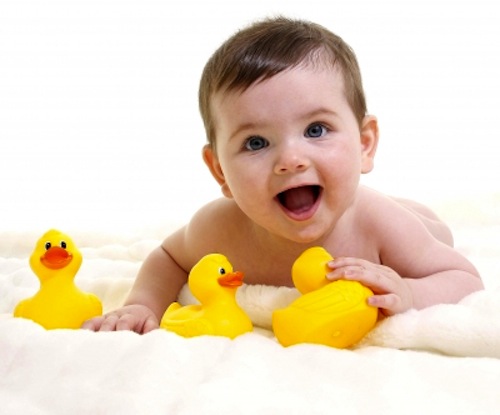 From the time they are born, until the age of 6, children go through five important stages of play. These stages are what teach children motor skills, recognition of others and social skills.
1. Solitary play
Under 2 years
Under the age of two years, babies are exploring the new world around them. They spend most of their playtime making use of all of their senses, touching everything around them, tasting anything they can get their hands on and babbling to hear their own voice. They bang, learning repetition and trial and error. This is all part of starting to learn motor skills, creating functioning, active babies.
2. Parallel play
2 years old
The next stage of play is for 2 and 3 year-olds. Parallel play is when socializing first begins. Babies at this stage play next to each other, but do not interact. Even though they do not acknowledge each other, they do recognize that other babies are there. This is the first stage in stepping outside of one’s self and noticing others.
3. Imitative play
2-3 years old
Shortly after parallel play, children start to imitate those around them. They’ve probably already been imitating their parents and adults in their lives, but at the stage of imitative play, they’re starting to embrace the actions of those their age. This is the first outward sign of acknowledging others.
4. Associative play
3-4.5 years old
While maintaining their independent interests, children play together. They may acknowledge what the other is doing and discuss what they are doing with each other, but they are not yet working toward a common goal. They are not yet playing together.
5. Cooperative play
4-6 years old
Finally, during cooperative play, children start to work toward a common goal. They are working together, or against each other, but most definitely interacting. This is the vital stage where we start to see future socializing skills forming.
Top Educational Books for Tots
05 February 2013
No comments
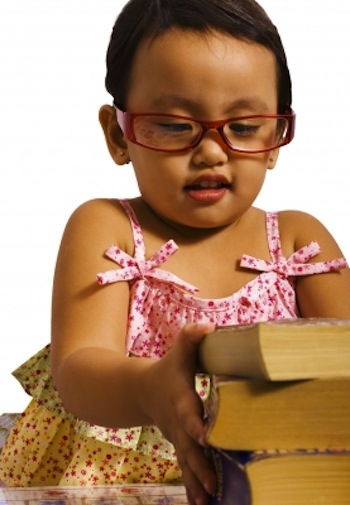
Counting books
There’s a whole list of books out there that help kids learn their numbers.
- 1, 2, 3 to the Zoo by Eric Carle explores the magic of numbers as different animals pile on the train to head to the zoo. This story is meant for kids 2-4 years old.
- Counting Kisses by Karen Katz is a cute counting book for kids ages 0-4.
- How Do Dinosaurs Count to 10? by Jane Yolen, for kids 4-7 years old, uses rhymes to help teach readers how to count to 10.
- In David Kirk’s Miss Spider’s Tea Party, for 4-6 year-olds, Miss Spider attempts to squash her neighbors’ fear of her by throwing a tea party.
ABC books
ABC books like these teach children letter recognition:
- Pam Abrams’ Now I Eat My ABCs for tots 0-3 has a yummy food assigned to each letter of the alphabet. B is made of blueberries and O is an orange.
- I Spy Letters by Jean Marzolo lets 0-4 year-olds learn letters through rhyming and hand-painted letters.
- The classic Chicka Chicka Boom Boom by Bill Martin Jr. and John Archambault tells the story of a, b, c, d and e meeting at the top of a coconut tree.
Colors
Teach your little ones colors:
- Justine Smith’s Colors is filled with bright, bolds illustrations. This book is made for children 1-3.
- A kitten hunts for its favorite color in Cat’s Colors by Jane Cabrera.”Favorite
Shapes
Help toddlers learn their shapes:
- Every day objects in Justine Smith’s Shapes help kids 0-2 learn shapes. Plus, the rhyming words and colorful illustrations make learning fun.
Sources:
-“Educational Books for Toddlers.” Scholastic. http://www.scholastic.com/resources/article/educational-books-for-toddlers/
-“Favorite Books for Preschoolers.” Great Schools <http://www.greatschools.org/cgi-bin/showarticle/3607/>
-Photo courtesy of Stuart Miles/freedigitalphotos.net
Sign Language for Babies
04 February 2013
No comments

Recently, more and more parents have been teaching their little ones sign language, many before they can even speak. The idea is that babies have the cognitive ability to comprehend language, but lack the physical ability to make the sounds. They can, however, learn sign language because the ability to make hand motions comes before the ability to easily form words.
Many experts even believe the benefits of learning sign language go farther than communication. Some have found that use of signing as a baby leads to confidence and higher self-esteem later in life. Signing also rewards eye contact, an important component of socializing that they’ll master in their later years.
Take the time for a short class, research online or pick up a book on simple sign language. Then start signing to your baby when you speak to him or her. As early or six or seven months, little ones can start using those signs to communicate with you.
Manners
“Please” and “thank you” are easy signs to learn, but they’ll help instill manners from the very beginning, making them a habit and giving you the most polite baby around!
Food
Teach your baby his or her favorite foods. Signs for “milk” “peas” and “applesauce” could save you a spit up mouthful of mushed up carrots. Plus, the simple signs for “food” and “water” help your baby tell you when he or she is hungry or thirsty.
Useful words
Signs for “more” and “done” can be more useful than imaginable. Babies often throw tantrums to show frustration and what’s more frustrating than being unable to communicate? Save yourself a scene by teaching your little one how to ask for more or tell you they’re finished.
Sources:
-“Baby sign language: top ten starter signs.” Baby Sign Language
-“Teaching your baby sign language can benefit both of you.” Psych Central
-Photo courtesy of photostock/freedigitalphotos.net
Raising Bilingual Children
31 January 2013
No comments
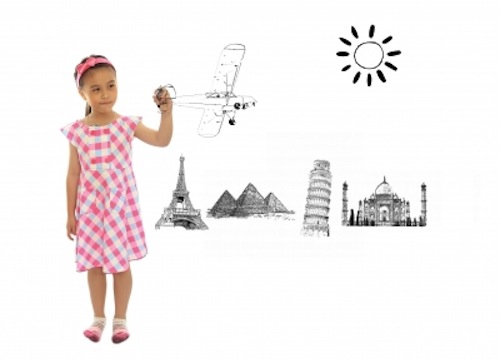
The percent of children who speak a language other than English at home has risen from 10% to 21% in the past three decades, according to the National Center for Education Statistics. The amount of bilingual kids is on the rise and, while it’s actually been proven that older children may have an advantage when learning a second language, it never hurts to begin early. Starting off with more than one language as a baby will not slow progress of language in any way and will only advance memorization and problem solving skills. Here are some helpful tips for raising bilingual children:
Learn with them.
If you don’t already speak the second language you’re introducing to your child, this is your opportunity to learn too. They better you understand what you expect your little one to learn, the more thorough job you can do teaching them.
Start small.
Don’t feel like you need to be a pro and start speaking half in English and half in the chosen language. Start by throwing in a couple bedtime books in Spanish. Or sing simple, children’s French songs in the car. Adding small splashes of the secondary language will help teach your toddler basic vocabulary and concepts, the first start to raising a bilingual child.
Hire bilingual help.
Need a babysitter or nanny? Consider hiring one who speaks a second language and request that they communicate with your kids using that language at least 50% of the time. This is a great approach because it incorporates handy, everyday activities with the new vocabulary, making it easier to learn the familiar actions.
Take a vacation.
If affordable, travel to a country that speaks the language your child is learning. This is an especially great option as children get older and learn social skills. It will give them the opportunity to use their new language while making new friends.
Sources:
-Lowry, Lauren. “Bilingualism in Young Children: Separating Fact from Fiction.” The Hanen Center.
-“Raising bilingual kids: benefits and techniques.” PHD in Parenting.
-“ Fast Facts: English Language Learners.” National Center for Education Statistics.
-Paturel, Amy. “A Guide to Raising Bilingual Children.” Parenting.com
-Photo courtesy of Phaitoon/freedigitalphotos.net
Kids Nightmares: What Causes Them and How to Handle Them
29 January 2013
No comments

Right around preschool-age, children start recognizing that nightmares are only dreams and cannot hurt them. This does not mean your child is any less scared. Your little one still needs your reassurance and understanding. Here’s a little bit of information about what may be causing his or her bad dreams and what you can do to help:
What causes nightmares?
1. An active imagination could be part of the reason your child wakes up in a cold sweat. Preschoolers use their imagination to make sense of the world around them. It can be used as their way of working through new information.
2. Children at this age have difficulty separating reality from make believe. They may believe in the Bogeyman as much as they believe in Santa Claus, making their nightmares that much more realistic.
3. Stress can trigger nightmares and stress is often a result of change at this age. Starting preschool is a huge change in preschoolers’ lives so a sense of worry and stress is only natural.
4. If something traumatic has recently happened in your child’s life, that could be the perpetrator. If there was a recent car accident or severe injury, nightmares could be a natural effect.
How can you help?
1. Help your child calm down as much as you can. Even though he or she is worked up, it’s important that they lose as little sleep as possible.
2. Try asking your kiddo what the dream was about and then use simple logic to explain that it was only a dream and, even though it was certainly scary, it wasn’t real and can’t hurt them.
3. When talking about the nightmare, keep it short and simple. You want to listen and reassure your little one, but you don’t want to spark their imagination and trigger any new nightmares.
4. Try soothing you child by rubbing his or her back, singing them a song or maybe just giving them a huge hug.
5. Prevent nightmares in the first place by sticking to a bedtime routine. Whether this includes reading a book, telling a story or singing a song, follow the same pattern nightly. Routine creates a sense of safety.
Sources:
-“Nightmares.” Kids Health.
-“Nightmares.” What to Expect.
-Photo courtesy of Jeanne Claire Maarbes/freedigitalphotos.net
Motor Skill Milestones
28 January 2013
No comments

From only a few months old, babies will begin to develop motor skills. At first they’ll grab and giggle, but soon, they’ll begin to move their entire bodies.
Remember that each baby develops at his or her own pace so don’t panic if your child varies. However, if this is an ongoing trend you should ask your pediatrician about it just in case there are developmental delays.
Here are some key motor skill milestones to prepare for:
Rolling over
Around the same time that your baby is learning to sit on his or her own, they’ll learn to roll over. You’ll start to see your baby lift head and shoulders high, using arms in what looks like imitation pushups. Eventually, at as early as four months, your little one may be able to roll over from belly to back. But don’t worry if it takes another month or two to reverse the motion.
Crawling
Crawling typically starts to take place between six and 10 months. Likely signs that crawling is coming is if your baby starts repositioning his or herself from sitting up to hands and knees. You also may see some scooting, a sign of attempted movement. At first, babies may use the right leg and arm at the same time, but they’ll quickly learn that using the left arm with the right leg is much steadier and more efficient. Crawling gives babies an opportunity to explore the world around them.
Standing
After babies master crawling, they will begin to stand, not on their own at first, but while holding onto you or other objects for support. Babies are normally proficient standers by around nine months. Standing is an exciting sign because it’s the first step to walking.
Walking
Arguably one of the most exciting motor skill milestones, walking typically begins by holding onto objects and inching along. Most babies begin to walk on their own at around one year, but don’t begin to use more finely tuned motor skills, like walking backwards, until around 15 months.
Sources:
-“Developmental milestones: Rolling over.” Baby Center.
-“Baby physical and motor skills.” Baby Zone.
-“Baby Milestones.” Parenting.com.
-“Developmental milestones: Crawling.” Baby Center.
-“Milestone chart: 7-12 months.” Baby Center.
-Photo courtesy of photostock/freedigitalphotos.net


Latest Pins on Pinterest
-

-

easy baked ravioli recipe everyone will love! Also easy to pack inside a school lunch. with gluten free option
-

-

-

-

-

A fun and delicious breakfasty twist on salad!
-

No sew face mask project
-

Make your favorite Mac & Cheese recipe (or the box kind works nicely for this and the kids love it anyway ;). At the same time, throw together your normal Chili recipe (here’s a super easy chili recipe if you don’t have your own).
-

Make your favorite Mac & Cheese recipe (or the box kind works nicely for this and the kids love it anyway ;). At the same time, throw together your normal Chili recipe (here’s a super easy chili recipe if you don’t have your own).
-

Since we live in the country that is open to the brunt of all the weather (wind, wind and more wind), it is super important to provide the best support to garden plants right from the beginning. There is no “one best way” to do this. I usually work with whatever I have on hand as you can see from some of the included photos.
-

Since we live in the country that is open to the brunt of all the weather (wind, wind and more wind), it is super important to provide the best support to garden plants right from the beginning. There is no “one best way” to do this. I usually work with whatever I have on hand as you can see from some of the included photos.
